
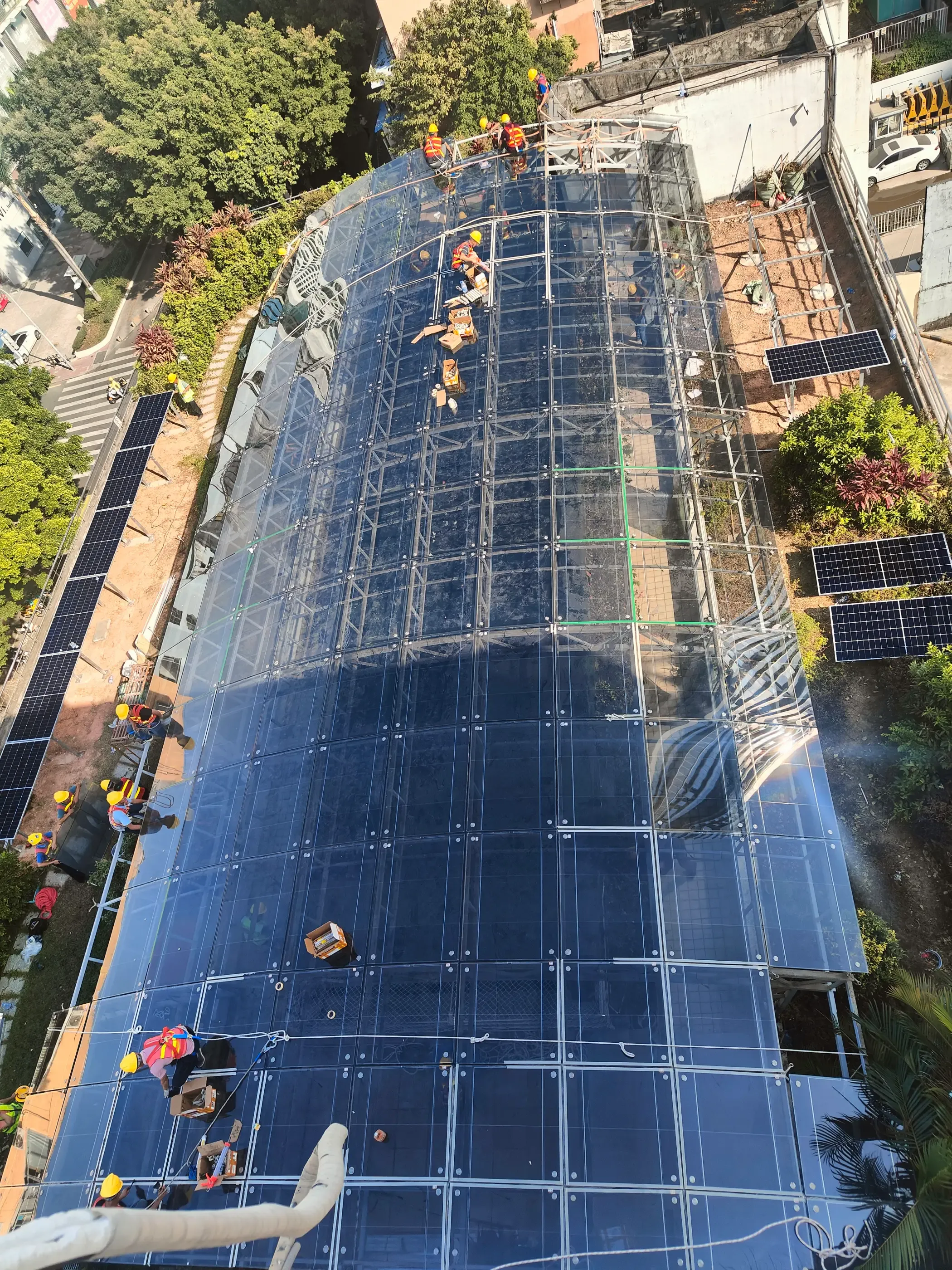
Solar / BIPV Glass
Building-integrated photovoltaic (BIPV) glass for solar facades, curtain walls, skylights and canopies. Custom glass sourcing, configurations and project support from True Glass.
Performance & Sustainability Glass
BIPV Glass for Building Facades & Architectural Applications
Turn the building envelope into an active energy-generating surface. Building-integrated photovoltaic (BIPV) glass combines architectural glazing with solar power generation, helping project teams integrate renewable energy into facades, curtain walls, skylights and canopies.
True Glass provides project-oriented glass sourcing, specification review and customized supply coordination for commercial developments, facade contractors and architectural glazing projects.
Discuss Your BIPV Project → Explore SpecificationsPV Technologies
CdTe Thin Film / Mono-Si
Panel Size Range
400 × 400 to 3300 × 4800 mm
Glass Thickness
5+5 to 15+15 mm
Design Options
Light Transmission, Color & Pattern
Published product ranges are indicative. Final dimensions, glass build-up, PV output and project suitability are subject to technical confirmation.
01 / Product Overview
What Is Building-Integrated Photovoltaic Glass?
BIPV glass is a building envelope material designed to generate electricity from sunlight while serving an architectural glazing function. Unlike conventional solar panels mounted separately onto a building, BIPV can be incorporated into the design of the facade or roof glazing itself.
Depending on the selected photovoltaic technology and project requirements, solar cells are integrated into a glass assembly to create a solution that combines power generation, daylight management and architectural expression. Transparency, color, pattern and panel dimensions can be considered together during specification development.
For project teams, the key is to balance energy output with visual appearance, daylight requirements, facade performance and installation details from the early design stage.
02 / Technology Options
Select a Photovoltaic Technology for Your Project
The appropriate BIPV configuration depends on the intended application, required power output, visible light transmission, facade appearance and system design.
Option 01
CdTe Thin-Film BIPV Glass
A thin-film photovoltaic option for building-integrated applications. Project configurations can be developed around facade design, transparency, color and the required glass assembly.
Option 02
Mono-Si Crystalline BIPV Glass
A crystalline silicon photovoltaic option for projects that require a tailored balance of power generation, panel appearance and integration with the building envelope.
Cell layout, visible light transmission, rated power and electrical characteristics vary by technology and configuration. Request product-specific data for a direct comparison.
03 / Architectural Applications
Where Can BIPV Glass Be Used?
Solar Facades
Integrate photovoltaic glazing into building elevations to support on-site electricity generation while maintaining a coordinated facade design.
Curtain Walls
Explore BIPV glass for suitable curtain wall zones, including project-specific vision or opaque areas, subject to system and performance requirements.
Skylights & Canopies
Combine overhead architectural glazing with solar generation where structural, weatherproofing, thermal and safety requirements can be met.
Commercial Developments
Consider BIPV as part of sustainability-led offices, public buildings, transport facilities and other developments with on-site renewable energy goals.
04 / Customization & Specifications
Custom BIPV Glass for Project-Specific Requirements
Architectural BIPV is not a one-size-fits-all product. Panel dimensions, glass composition, PV technology and visual characteristics need to be coordinated with the facade or roofing system and the project's performance criteria.
| Specification | Available Scope / Project Considerations |
|---|---|
| Photovoltaic technology | CdTe thin film or Mono-Si crystalline silicon, subject to the selected product configuration. |
| Panel dimensions | Published range: 400 × 400 mm to 3300 × 4800 mm. Confirm maximum manufacturable dimensions for the selected technology and assembly. |
| Glass thickness | Published glass build-up range: 5+5 mm to 15+15 mm. Final composition is subject to engineering review. |
| Light transmission | Configurable according to the selected technology and design. Confirm visible light transmittance (VLT) and rated power for the specific build-up. |
| Color & pattern | Customizable visual treatments subject to product availability, optical performance and manufacturing feasibility. |
| Glazing configuration | Laminated glass assemblies and potential integration into insulated glass units (IGUs), subject to technical compatibility review. |
| Electrical & system interface | Confirm output wiring, connectors, junction arrangements, mounting interfaces and compatibility with the project electrical system. |
Dimensions and thicknesses above are supplier-published ranges, not a guarantee that every combination is available. Request current technical drawings and product data before final specification.
05 / Performance & Compliance
Performance Must Be Verified at Assembly Level
For commercial and public building projects, photovoltaic performance is only one part of the specification. The complete glazing assembly must also satisfy the relevant structural, safety, thermal, weatherproofing and electrical requirements.
Glazing Safety
Review glass heat treatment, laminated construction, impact requirements and the applicable building codes.
PV Performance
Verify rated power, voltage, current, power tolerance and test conditions using the selected product's technical datasheet.
Building Envelope
Check wind loads, support conditions, thermal movement, drainage, air and water performance, and IGU compatibility where applicable.
Code & Certification
Confirm that test reports and certifications apply to the exact product, configuration, market and intended installation.
Supplier materials reference EN 61215-2017, IEC 61730-2018 and certain fire-related standards. Applicable editions, test scope and certificates should be verified with the supplier before submission or approval.
06 / Why True Glass
Project-Oriented BIPV Glass Sourcing
BIPV procurement involves more than selecting a glass product. The glazing specification, photovoltaic output, facade interface, supporting documentation and delivery schedule all need to work together. True Glass helps project teams coordinate these requirements with suitable manufacturing partners.
Specification Review
Review drawings, dimensions, glass build-up and performance requirements before requesting a project quotation.
Manufacturing Coordination
Coordinate technical questions, customization feasibility, samples and supporting documentation with manufacturing partners.
Export & Delivery Planning
Discuss packing, shipment planning, delivery schedules and documentation for international construction projects.
Multi-Product Coordination
Coordinate BIPV requirements with related architectural glazing and other glass products for a more consistent sourcing process.
07 / Frequently Asked Questions
BIPV Glass: Common Project Questions
What is the difference between BIPV glass and conventional solar panels?
Conventional solar panels are generally mounted onto a separate structure, while BIPV products are designed to form part of the building envelope. The appropriate solution depends on the architectural system, required performance and applicable codes.
Can BIPV glass be transparent?
Selected BIPV configurations can be designed with different light transmission levels. Actual transparency depends on the photovoltaic technology, cell layout and glass assembly. Confirm VLT and power output together rather than treating them as independent specifications.
Can BIPV glass be integrated into curtain walls or IGUs?
BIPV glass can be developed for suitable facade applications, and IGU integration may be possible for compatible configurations. The proposed build-up must be reviewed for structural, thermal, electrical and system compatibility before approval.
What BIPV glass sizes are available?
The published product range is 400 × 400 mm to 3300 × 4800 mm, with glass thickness options listed from 5+5 mm to 15+15 mm. Confirm the feasible dimensions and glass composition for your selected technology and project.
What information is needed for a BIPV quotation?
Useful information includes project location, application, drawings, panel dimensions and quantities, required glass build-up, target light transmission, rated power requirements, applicable standards and expected delivery schedule. Preliminary information is sufficient to start a technical review.
Can True Glass support samples and project submittals?
Sample availability, technical datasheets, drawings and test documentation can be discussed during project review. The deliverables and lead times depend on the selected product configuration and supplier confirmation.
Start Your Project
Looking for BIPV Glass for Your Next Development?
Share your drawings, specifications or preliminary project requirements. Our team can help review the glass configuration and coordinate a suitable sourcing solution.
Request a Project Review →Email: sales@true-glass.com