
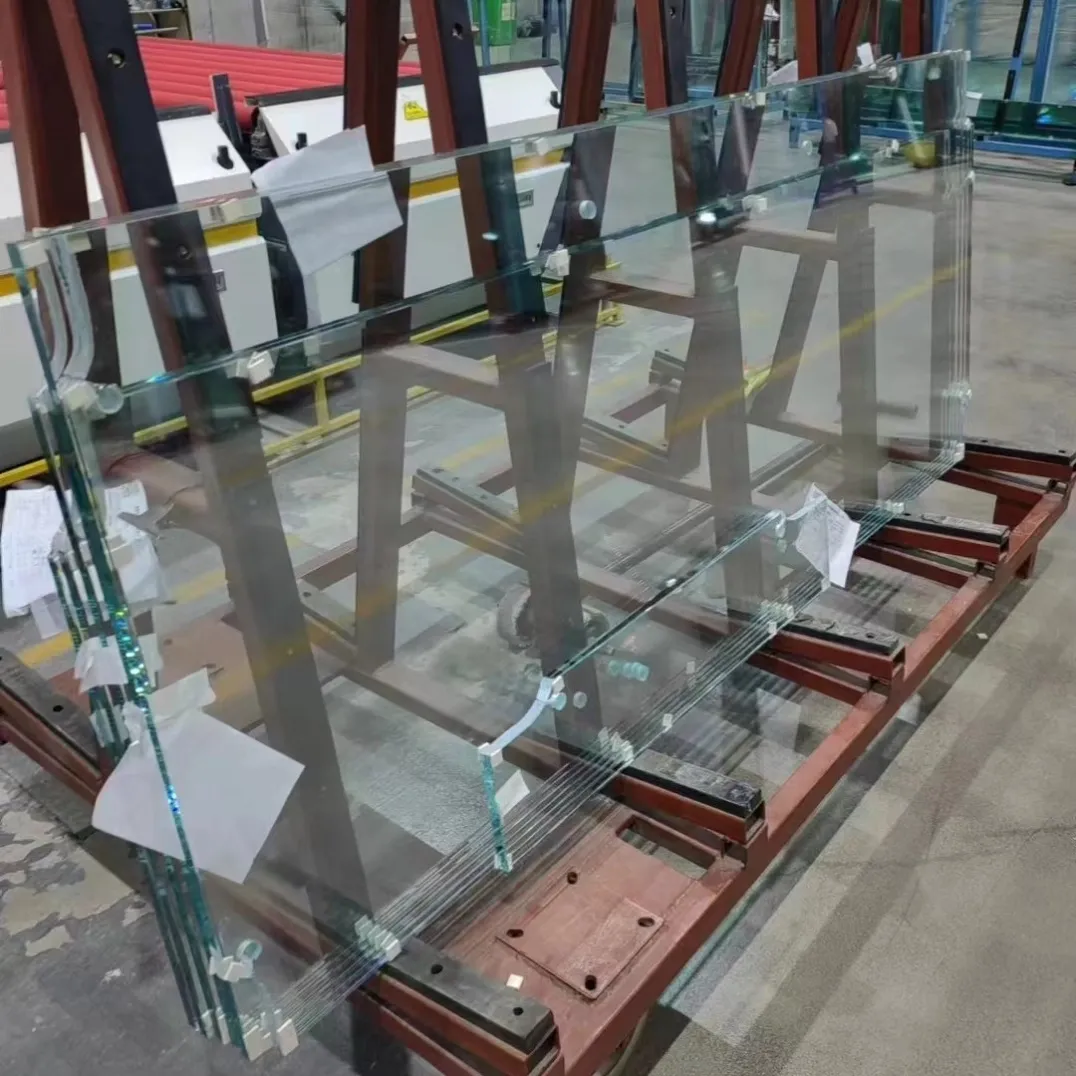
Processed Glass
Heat-Strengthened Glass
Heat-strengthened glass is float glass heat-treated to roughly half the surface compression of fully tempered glass — increasing strength over annealed glass while offering better flatness and a lower spontaneous breakage risk than tempered glass. A common choice where optical quality and reliability matter as much as raw strength.
Specifications
- Standard Thickness
- 4mm – 19mm
- Max Size
- 3300 × 6000mm (jumbo available on request)
- Free Sample(12'')
- 7days
Key Features
Approximately 2x the strength of annealed glass, lower risk of spontaneous breakage from nickel sulfide (NiS) inclusions, and better flatness with less roller wave distortion than fully tempered glass. Note: as a monolithic pane, heat-strengthened glass does not meet safety glazing standards and typically requires lamination for safety-rated applications.
Where This Glass Is Used
Curtain wall spandrel panels, laminated structural assemblies, and any application where facade flatness or reduced spontaneous breakage risk is prioritized over maximum strength.
Manufacturing Process
- Controlled heating & partial quenching — Heated similarly to the tempering process but cooled at a slower, controlled rate, producing roughly half the surface compression of fully tempered glass.
- Reduced NiS breakage risk — Lower internal stress reduces (but does not eliminate) the risk of spontaneous breakage from nickel sulfide inclusions.
- Improved flatness — The slower process typically yields flatter panels with less roller wave distortion than tempering, valuable for large reflective or coated facades.
- Lamination for safety rating — Heat-strengthened glass is commonly laminated with a PVB/SGP interlayer to meet safety glazing requirements where code-mandated.
Applications & Use Cases
- Curtain Wall Spandrel Panels — Preferred where flatness matters for reflective coated glass, reducing visible distortion on facades.
- Structural Glazing Interlayers — Frequently laminated with PVB/SGP for structural glass assemblies requiring both strength and safety.
- Wind-Load Glazing — Used where wind load requires more strength than annealed glass but full tempering isn't specified.
- Insulated Glass Units — A common lite choice within IGU assemblies for facades prioritizing optical flatness.
Standard Sizes & Specifications
Reference figures only — confirm against current production capability before publishing.
Thickness | Max Size (Standard) | Min Size | Thickness Tolerance |
|---|---|---|---|
4–6mm | 2440 × 3660mm | 150 × 150mm | ±0.3mm |
8–10mm | 2440 × 3660mm | 150 × 150mm | ±0.3mm |
12–19mm | 3300 × 6000mm (jumbo) | 200 × 200mm | ±0.4–0.5mm |
Customization note for this page: Available laminated with PVB/SGP interlayer to add safety-glazing rating where required.
Technical Service
We support your project from drawing review to delivery, not just order fulfillment.
- Drawing & Spec Review — Shop drawings and project specs are reviewed before production to confirm sizes, tolerances, and edge/hole details match your requirements.
- Testing & Documentation — Mill test certificates, thickness/strength test reports, and compliance documentation provided for project submittals.
- Technical Consultation — Our team advises on coating, thickness, and configuration selection to meet your project's structural and energy code requirements.
Customization
- Custom Cut Sizes & Shapes — Curved, notched, cut-corner, and irregular shapes fabricated to your CAD drawings, not limited to standard rectangles.
- Edgework & Drilling — Polished, beveled, or seamed edges, plus precision hole drilling and cutouts for hardware and fittings.
- Coating & Printing Options — Combine with Low-E coating, tinting, or ceramic silkscreen/digital printing on the same order.
Packaging & Shipping
- Export-Grade Crating — Reinforced wooden A-frame or flat crates with edge protection, built for ocean freight handling.
- Container Loading — Load plans optimize container utilization while maintaining safe glass spacing to prevent transit damage.
- Shipping Documentation — Packing lists, certificates of origin, and mill certificates prepared in advance for smooth customs clearance.
- Lead Time — 7days in 12'' sample; 15days in mock up sample; 35days in project order.