
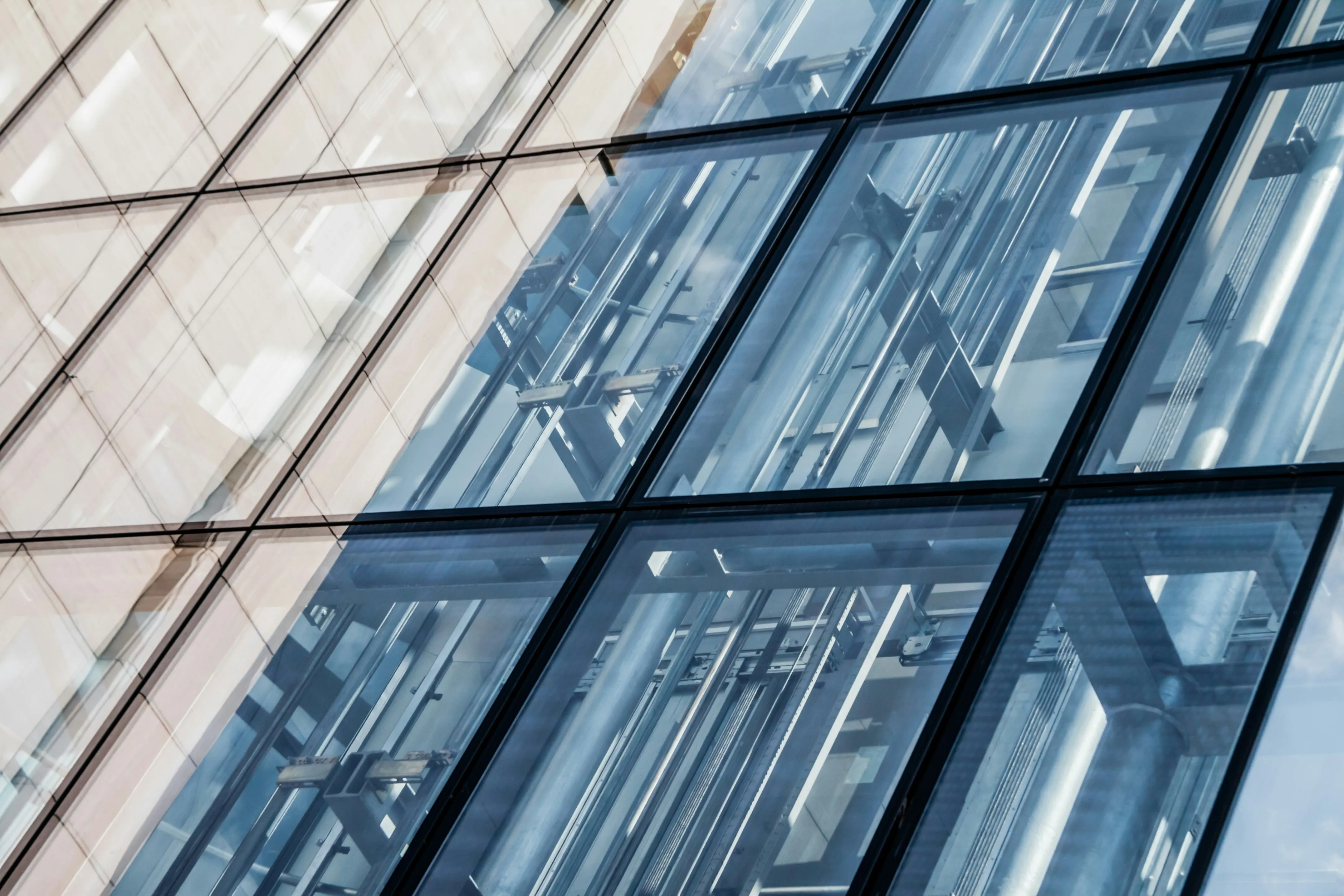
SELF‑CLEANING GLASS
Self-cleaning glass carries a photocatalytic and hydrophilic coating that breaks down organic dirt under UV exposure and allows rainwater to sheet off the surface rather than beading, reducing the frequency of manual cleaning.
Specifications
- Standard Thickness
- 5mm/6mm/8mm/10mm
- Free Sample(12'')
- 15days
Architectural Glass Solutions
Self-Cleaning Glass
A practical glazing solution designed to reduce exterior glass maintenance. Self-cleaning glass combines photocatalytic action with a hydrophilic surface to help break down organic dirt and rinse away loosened contaminants with water.
Request a QuoteWhat Is Self-Cleaning Glass?
Self-cleaning glass is architectural glass with a specially engineered photocatalytic and hydrophilic coating on one surface. The coating is applied during the glass manufacturing process using an online chemical vapour deposition (CVD) technique, forming an integrated hard-coated surface.
When exposed to daylight, the coating helps break down organic contaminants deposited on the glass. When rainwater or rinse water reaches the surface, its hydrophilic properties encourage water to spread into a thin, even sheet, helping wash away loosened dirt and reduce visible water marks after drying.
By combining these two effects, self-cleaning glass can help keep exterior glazing cleaner for longer and reduce the frequency and effort of routine cleaning.
How Does Self-Cleaning Glass Work?
01 / PHOTOCATALYTIC ACTION
Daylight Helps Break Down Organic Dirt
The coating uses energy from daylight to help decompose organic deposits on the glass surface. The process can continue in overcast conditions, although its rate depends on available light and the surrounding environment.
02 / HYDROPHILIC ACTION
Water Spreads to Rinse the Surface
Rainwater spreads more evenly across the coated surface instead of forming separate droplets. This helps rinse away loosened dirt and some inorganic particles, reducing visible spots and streaks as the glass dries.
Key Benefits of Self-Cleaning Glass
Reduced Cleaning Effort
Helps reduce the frequency and effort required for routine exterior glass cleaning.
Photocatalytic Performance
Daylight activates the coating to help break down organic contaminants on the glass surface.
Hydrophilic Surface
Water spreads into a more uniform sheet, helping rinse away loosened dirt.
Integrated Hard Coating
The coating is formed during glass production and does not normally require a separate post-installation coating treatment.
Neutral Appearance
A clear, neutral appearance suitable for a range of architectural glazing applications.
UV Control
Provides a degree of UV control. Actual UV transmission varies with glass thickness and glazing configuration.
Typical Applications
Self-cleaning glass is particularly suitable for exterior glazing where access for regular cleaning may be difficult, time-consuming or costly.
- Commercial building facades and curtain walls
- Residential houses and villas
- Apartment buildings and residential developments
- Conservatories and sunrooms
- Skylights and roof glazing
Product Specifications
| Item | Specification |
|---|---|
| Product Type | Photocatalytic hard-coated self-cleaning glass |
| Coating Technology | Online chemical vapour deposition (CVD) |
| Coated Surface | Surface #1 — exterior-facing side |
| Available Thicknesses | 5 mm, 6 mm, 8 mm and 10 mm |
| Typical Sheet Sizes | 2134 × 3300 mm, 2440 × 3300 mm, 2700 × 3300 mm |
| Appearance | Neutral / clear appearance |
Availability of thicknesses, sheet sizes and secondary processing should be confirmed for each project.
Optical & Thermal Performance
The following figures are supplier-provided reference values for single-pane glass with the self-cleaning coating on surface #1.
| Parameter | Standard / Unit | 5 mm | 6 mm | 8 mm | 10 mm |
|---|---|---|---|---|---|
| Visible Light Transmittance | % | 82 | 82 | 82 | 81 |
| Visible Reflectance — Exterior | % | 17 | 16 | 15 | 15 |
| Visible Reflectance — Interior | % | 17 | 16 | 15 | 14 |
| Solar Transmittance | % (NFRC) | 76 | 74 | 71 | 68 |
| Solar Reflectance | % (NFRC) | 14 | 13 | 12 | 12 |
| UV Transmittance | % (NFRC) | 40 | 40 | 40 | 37 |
| SHGC | China JGJ/T151 | 0.79 | 0.78 | 0.76 | 0.74 |
| SHGC | NFRC | 0.79 | 0.78 | 0.76 | 0.74 |
| Shading Coefficient (SC) | China JGJ/T151 | 0.91 | 0.90 | 0.88 | 0.85 |
| Shading Coefficient (SC) | NFRC | 0.91 | 0.90 | 0.88 | 0.85 |
| U-Value | W/(m²·K), China JGJ/T151 | 5.21 | 5.18 | 5.14 | 5.10 |
| U-Value | W/(m²·K), NFRC Summer | 5.27 | 5.24 | 5.19 | 5.13 |
| U-Value | W/(m²·K), NFRC Winter | 5.84 | 5.81 | 5.67 | 5.67 |
| U-Value | W/(m²·K), EN 673 | 5.70 | 5.70 | 5.70 | 5.60 |
Note: These figures are reference data for single glazing, not the performance values of a complete window, facade or insulating glass unit. Actual project performance depends on the full glazing build-up, frame, cavity, gas fill and applicable test or calculation method. Confirm the current test report and standard designation before specification.
Installation & Maintenance Considerations
- The coated surface must face the exterior of the building (surface #1), for both single glazing and IGU applications.
- The glass needs several days of daylight exposure after installation to activate the self-cleaning function.
- Natural rainfall may provide sufficient rinsing in many climates. In dry conditions or during extended periods without rain, rinse the glass with clean water when necessary.
- Self-cleaning glass is not maintenance-free. Heavy deposits, sheltered locations and stubborn stains may still require manual cleaning.
- Follow the supplier's approved handling and cleaning instructions. Avoid abrasive materials and unapproved chemicals.
Frequently Asked Questions
Does self-cleaning glass clean itself completely?
No. It helps reduce the build-up of certain contaminants and the frequency of routine cleaning, but it does not eliminate maintenance. Heavy dirt, mineral deposits and sheltered areas may still need manual cleaning.
Does it work on cloudy days?
The photocatalytic process can continue under overcast conditions because daylight is still available. The rate of activation and cleaning depends on light intensity and environmental conditions.
Can self-cleaning glass be used in double glazing?
Yes, subject to the approved IGU design. The self-cleaning coating must face the exterior of the building on surface #1. The complete unit configuration should be confirmed before production.
What happens in areas with little rainfall?
In dry climates, the exterior surface can be rinsed with clean water when needed. The hydrophilic surface helps water spread evenly across the glass.
Can it be tempered or laminated?
Secondary processing compatibility depends on the specific coating and production route. Please share your required glass build-up and processing needs so they can be checked before specification.
Looking for Self-Cleaning Glass for Your Project?
Whether you are sourcing glass for a facade, skylight, residential development or conservatory, True Glass can help review your specifications and coordinate a suitable glass solution.
Discuss Your ProjectShare your dimensions, thickness, quantity, glazing configuration and delivery location for a project-specific quotation.