Sep 18, 2026
Switchable Glass: Intelligent Privacy & Light Control for Smart Spaces
Switchable Glass: Intelligent Privacy & Light Control for Smart Spaces In the era of modern architectural design and innovative interior solutions , Switchable Glass — also known as smart glass, PDL
Switchable Glass: Intelligent Privacy & Light Control for Smart Spaces
In the era of modern architectural design and innovative interior solutions, Switchable Glass — also known as smart glass, PDLC laminated glass or switchable privacy glass — has become a cornerstone of intelligent glazing systems. This advanced PDLC glass seamlessly transitions between transparent and opaque states with the flick of a switch, providing dynamic privacy control, everyday convenience and enhanced performance for offices, conference rooms, high-end interiors and more.
Switchable Glass has grown in popularity due to its ability to combine daylight optimization, privacy, UV protection and acoustic performance in one innovative glass solution. By replacing traditional blinds, curtains or opaque partitions with smart glass, designers are achieving more flexible, clean and modern spaces that respond instantly to the needs of occupants.
What Is Switchable Glass?
Switchable Glass is a laminated safety glass product incorporating a layer of Polymer Dispersed Liquid Crystal (PDLC) film between two glass panels. The PDLC interlayer responds to an electrical current: when power is applied, the liquid crystal particles align to allow light to pass through, making the glass clear and transparent; when power is removed, the crystals scatter light, turning the glass opaque and private.
This capability allows rooms or partitions to transform from public to private environments instantly — without mechanical systems, blinds, curtains or shading devices — making it ideal for flexible commercial interiors and modern architectural aesthetics.
How It Works
At the heart of Switchable Glass is the PDLC film layer, which behaves like a dynamic light filter. In the default (unpowered) state, the PDLC liquid crystals are positioned randomly, scattering light and creating an opaque, frosted glass appearance. When electrical voltage is applied, the crystals align in a uniform direction, allowing light to pass directly through the panel — resulting in a crystal-clear glass surface.
This transformation happens in a fraction of a second — often under 0.1 seconds — enabling privacy mode or transparency on demand. Unlike traditional shading systems that rely on manual operation, switchable glass provides instant responsiveness and integrates seamlessly into intelligent building systems.
Key Advantages of Switchable Glass
Instant Privacy Control
Users can go from a visually open layout to a fully private partition instantly with electrical control — eliminating the need for blinds, curtains or screen treatments.
Natural Light Optimization
When transparent, switchable glass maximizes daylight transmission, enhancing occupant well-being and reducing the need for artificial lighting.
UV Protection & Energy Efficiency
Smart glass blocks up to 99 % of harmful UV radiation, helping protect interiors and reduce fading, while also contributing to energy savings by moderating solar heat gain.
Acoustic Performance
The laminated structure can also provide sound damping, making it great for office partitions, meeting rooms or environments where privacy and noise control are required.
Seamless Aesthetic Integration
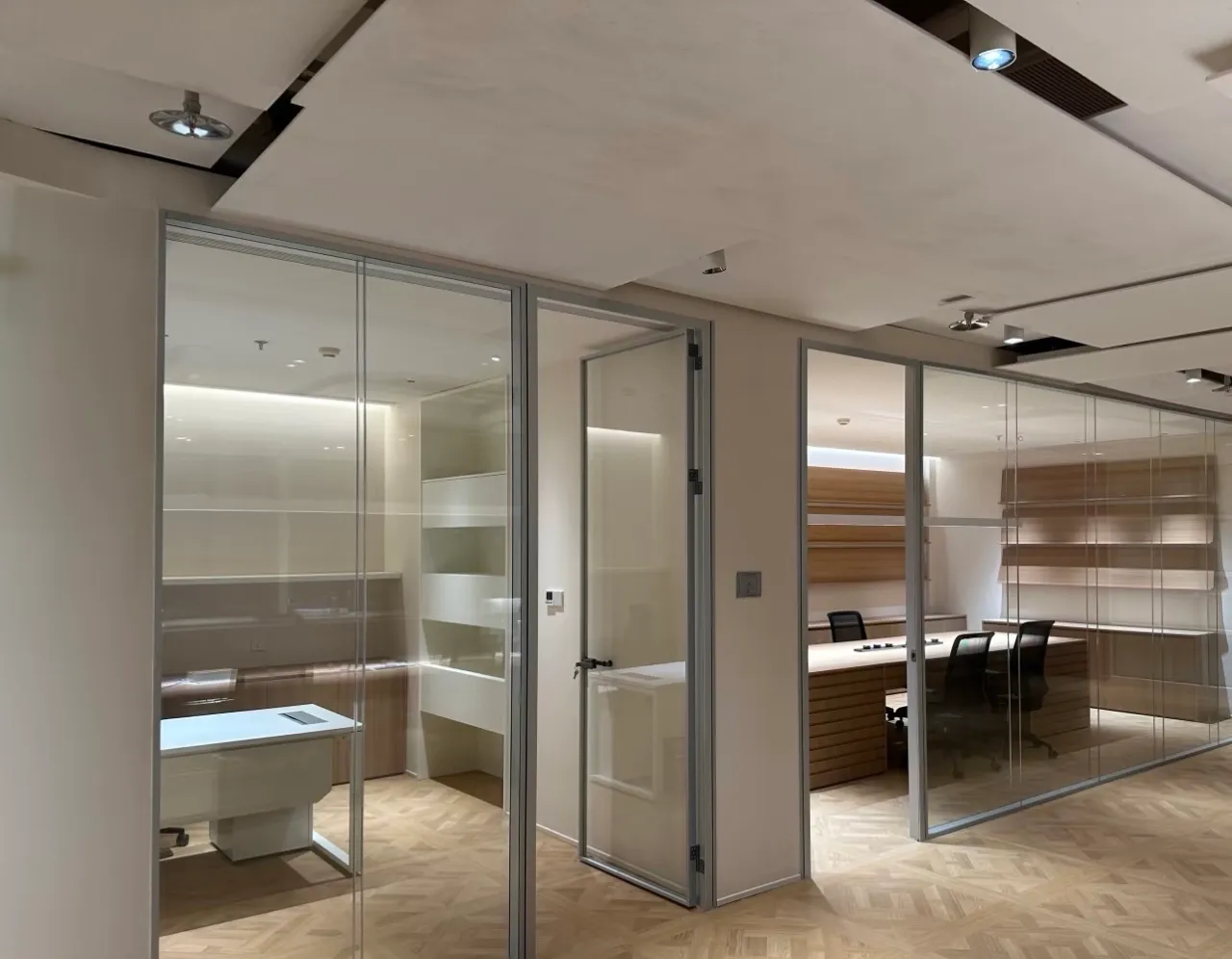
With modern design aesthetics in mind, switchable glass panels offer flush, minimalistic looks that integrate into luxury interiors, corporate spaces and contemporary architecture without visual clutter.
Applications Across Industries
Switchable Glass is versatile and adaptable to many professional and residential scenarios:
- Corporate Offices: Create spaces that alternate between open and private without permanent walls.
- Meeting and Conference Rooms: Provide visual privacy during meetings or presentations on demand.
- Healthcare and Clinics: Enhance confidential areas or partitions with privacy during consultations.
- Hotels and Hospitality: Furnish guest areas with dynamic privacy while maintaining bright, open interiors.
- Residential Interiors: Smart partitions that respond to lifestyle needs, from bedrooms to bathrooms or media spaces.
Installation and Maintenance Tips
For optimal performance, switchable glass should be professionally integrated with a stable electrical power supply and compatible control systems. Typical options include wall switches, remote controls or smart building integration. Routine maintenance involves gentle cleaning with non-abrasive glass cleaners to preserve clarity.
Conclusion
Switchable Glass represents the next step in intelligent glazing technology — offering privacy on demand, superior daylight control, acoustic benefits and sleek design. Whether used in offices, healthcare facilities, hospitality environments or modern residences, this smart glass solution enhances flexibility, comfort and architectural aesthetics — making it an indispensable component of forward-thinking spaces.