How Is Tempered Glass Made? Strength & Safety
Discover how tempered glass is manufactured, why it is stronger than annealed glass, how it breaks, and what to consider when specifying tempered safety glass.
ARCHITECTURAL GLASS GUIDE
How Is Tempered Glass Made? Strength, Safety & Applications
Tempered glass is widely used in modern buildings because it offers increased strength and a characteristic breakage pattern compared with ordinary annealed glass. Understanding how it is manufactured, how it behaves when broken and where it can be used helps architects, contractors and buyers specify the right glazing for each project.
From glass doors and shower enclosures to curtain walls and interior partitions, tempered glass is an important material in architectural glazing. Its properties are created through a controlled thermal process rather than simply by using thicker glass.
However, tempered glass is not unbreakable, and it is not automatically the right choice for every application. Its dimensions and edge details must be finalized before tempering, while certain applications require laminated glass or additional testing.
This guide explains the tempered glass manufacturing process, its strength and safety characteristics, common applications, and the key points to consider before placing an order.
In This Guide
1. What Is Tempered Glass?
Tempered glass, also called toughened glass, is glass that has been heat-treated to create a controlled stress distribution within the material. The surfaces are placed in compression while the interior is in tension. This stress pattern generally gives tempered glass substantially greater mechanical strength than comparable annealed glass.
The terms “tempered glass” and “toughened glass” are commonly used to describe the same type of fully thermally toughened glass. They should not be confused with heat-strengthened glass, which undergoes a different cooling process and has different strength and breakage characteristics.
Tempered glass is often specified where safety glazing or improved resistance to impact and thermal stress is needed. Whether a specific product satisfies a building code depends on its tested performance, the applicable standard and the installation.
2. How Is Tempered Glass Made?
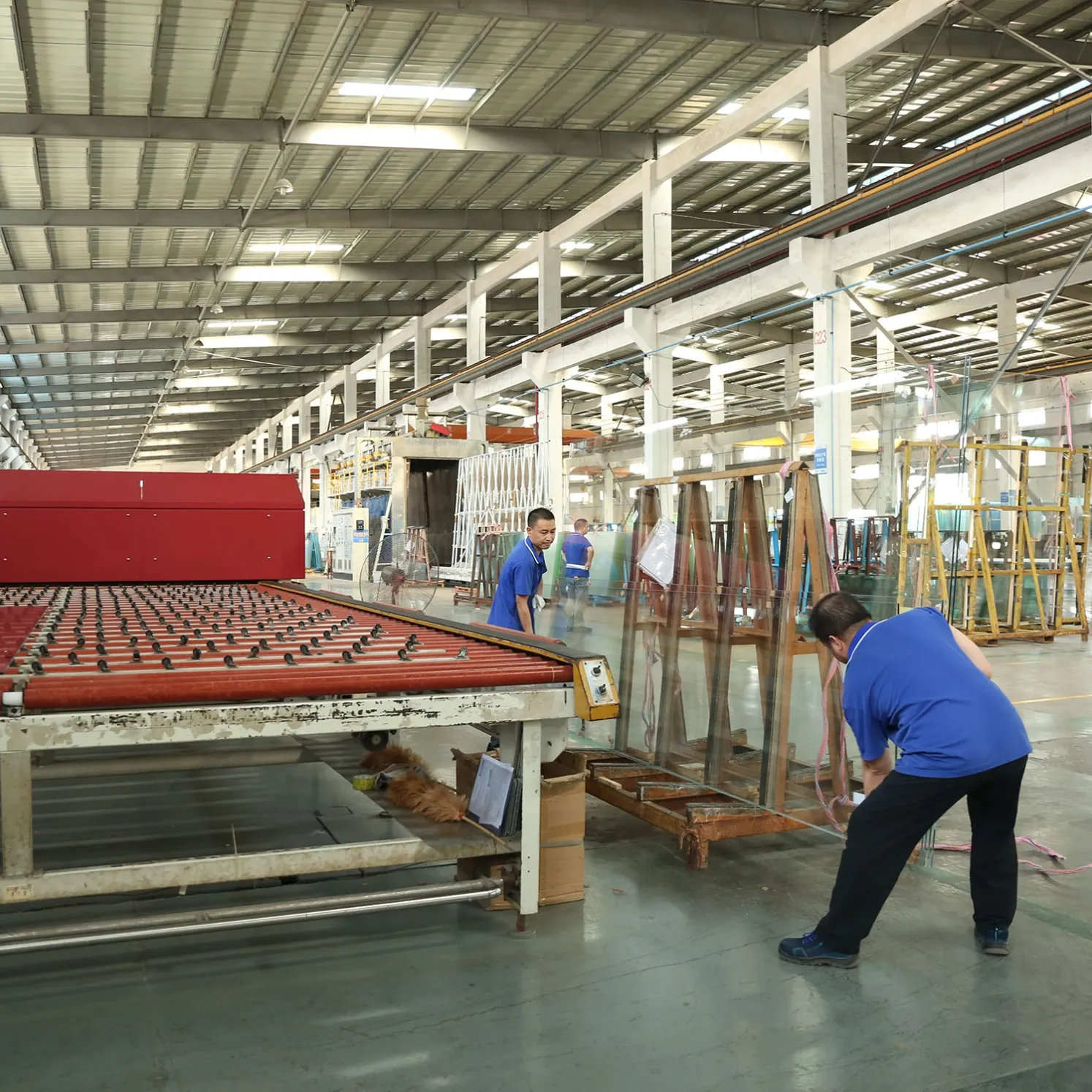
Conventional tempered glass is manufactured through controlled heating followed by rapid cooling, commonly called quenching. The process changes the stress distribution within the glass without changing its basic composition.
The Tempering Process Step by Step
STEP 01
Cutting and Fabrication
Cut the glass to size and complete required edgework, holes, notches and cut-outs before heat treatment.
STEP 02
Controlled Heating
Heat the prepared glass in a tempering furnace to a suitable temperature, typically around 600–700°C depending on the glass and process.
STEP 03
Rapid Cooling
Cool the heated glass rapidly using controlled air jets to establish the required surface compression and internal tension.
STEP 04
Inspection
Check dimensions, appearance, fragmentation or other required properties according to the applicable specification and standard.
During rapid cooling, the outer surfaces cool and solidify before the interior has fully cooled. As the core cools and contracts, the surfaces retain compressive stress while the core remains in tension. This internal stress pattern is the main reason tempered glass behaves differently from annealed glass.
Exact furnace temperatures, heating times and cooling conditions depend on glass thickness, composition, dimensions and equipment. A general temperature range should not be treated as a universal production recipe.
3. Why Is Tempered Glass Stronger?
Glass is a brittle material. Small surface flaws or edge damage can concentrate stress and initiate cracks when the glass is loaded. The compressive stress created during tempering helps resist the opening of these cracks under many loading conditions.
As a general reference, fully tempered glass is often described as having approximately four to five times the strength of comparable annealed glass under specified test conditions. Actual performance depends on the glass composition, thickness, edge quality, loading method and test standard.
Tempered glass also generally offers better resistance to thermal stress than comparable annealed glass. This can be beneficial in applications exposed to changing temperatures, solar heating or uneven temperature distribution.
Important Distinction
Higher strength does not mean tempered glass cannot break. Edge damage, installation stress, impact, thermal conditions and manufacturing factors can still cause failure. Glass thickness and heat treatment should be selected based on the actual project loads and requirements.
4. How Does Tempered Glass Break?
When fully tempered glass breaks, the stored internal stress causes the crack to propagate rapidly through the pane. It typically separates into numerous small, granular fragments rather than the long, sharp pieces commonly associated with annealed glass.
This breakage pattern can reduce the risk of certain severe cut injuries, which is one reason tempered glass is used in many safety-glazing applications. However, fragments can still cause injury, and the glass may fall out of its frame or opening after breakage.
Where retaining the glass after breakage is important, laminated safety glass may be more appropriate. Laminated glass uses an interlayer between glass plies to help hold fragments together, depending on the assembly and conditions.
Explore laminated glass solutions when post-breakage retention is part of the design requirement.
5. Common Applications of Tempered Glass
Doors and Entrance Systems
Tempered glass is widely used in suitable glass doors, storefronts and entrance systems where safety glazing is required.
Windows and Facades
Used in selected facade and window systems where the specified glass type must address impact, thermal stress or code requirements.
Partitions and Interior Glazing
Suitable for selected office partitions, commercial interiors and glass screens where a clear or decorative safety-glazing solution is required.
Shower Enclosures
Commonly used for shower doors and enclosures, subject to the applicable safety-glazing rules and installation requirements.
Balustrades and Railings
May form part of an engineered railing system. Laminated tempered glass is often considered where post-breakage retention is required.
Furniture and Display Panels
Used in suitable tabletops, shelving, showcases and display systems where impact or thermal performance is important.
6. What Are the Limitations of Tempered Glass?
It Cannot Be Cut or Drilled After Tempering
The stress pattern that makes tempered glass stronger also makes it unsuitable for conventional post-tempering cutting, drilling, notching or edgework. Such operations will normally cause the glass to break.
All dimensions, holes, cut-outs, edge polishing and hardware-related details must therefore be finalized before tempering. This is particularly important for frameless doors, shower enclosures and custom glass fittings.
Optical Distortion May Occur
Heating and cooling can introduce optical characteristics such as roller wave, bow, warp and anisotropy. These effects may be noticeable in reflections on large or coated panels. The actual appearance depends on the glass, processing equipment, dimensions and viewing conditions.
If visual uniformity is critical, define acceptance criteria and inspection conditions before production. A representative sample or mock-up may help establish expectations.
It Is Not Always the Best Standalone Safety Solution
Although tempered glass has a characteristic granular breakage pattern, the fragments may fall from the opening after the pane breaks. Certain overhead, railing and other applications may require laminated safety glass or another engineered assembly to meet post-breakage retention requirements.
Spontaneous Breakage Is Possible
Rare spontaneous breakage can occur in fully tempered glass, including in cases associated with nickel sulfide inclusions or other factors. Heat-soak testing may reduce the risk associated with certain nickel sulfide inclusions, but it does not eliminate all spontaneous breakage or guarantee against failure.
7. Tempered Glass vs. Heat-Strengthened Glass
Tempered glass and heat-strengthened glass are both produced by thermal treatment, but they have different stress levels and breakage behavior. They should be specified according to the actual performance requirement rather than treated as interchangeable products.
| Factor | Tempered Glass | Heat-Strengthened Glass |
|---|---|---|
| Strength | Generally about 4–5 times the strength of comparable annealed glass. | Generally about 2 times the strength of comparable annealed glass. |
| Cooling process | Rapid quenching creates higher surface compression. | Slower, controlled cooling creates lower surface compression. |
| Breakage behavior | Typically breaks into small granular fragments. | Typically breaks into larger pieces. |
| Typical use | Applications requiring fully tempered glass and its characteristic fragmentation. | Selected facade or laminated-glass applications where its properties suit the design. |
Heat-strengthened glass generally does not meet the same safety-glazing fragmentation requirements as fully tempered glass when used as a monolithic pane. Where safety performance is required, the complete assembly and applicable standard must be checked.
For additional product details, visit the Heat-Strengthened Glass product page.
8. How to Specify Tempered Glass for a Project
A complete specification helps the supplier assess manufacturing feasibility and avoid errors before heat treatment. Include the following details when requesting a quotation:
- Glass thickness, type and overall panel dimensions.
- Quantity and panel identification for projects with multiple sizes.
- Edgework, holes, notches, cut-outs and hardware positions.
- Clear, ultra-clear, tinted or other specified glass appearance.
- Any Low-E coating, ceramic printing or additional processing requirements.
- Application, structural loads, safety requirements and applicable standards.
- Optical quality requirements and acceptable visual characteristics.
- Any heat-soak testing, inspection or documentation requirements.
- Destination, packaging requirements and target delivery schedule.
Dimensioned drawings are particularly important for custom panels. Confirm all fabrication details before production because changes after tempering generally require a new pane.
9. Sourcing Tempered Glass for Architectural Projects
Selecting tempered glass involves more than choosing a thickness. The intended use, panel geometry, fabrication details, optical requirements and applicable safety standards must all be considered together.
True Glass supports project-based glass sourcing and specification coordination for architectural applications. Share your drawings, glass build-up and project requirements to discuss feasibility, available configurations and quotation.
Explore our Tempered / Toughened Glass product page for product options and project inquiry details.
Frequently Asked Questions
How is tempered glass made?
Glass is cut and fabricated first, then heated in a tempering furnace and rapidly cooled under controlled conditions. This creates surface compression and internal tension, increasing strength and changing its breakage behavior.
How much stronger is tempered glass than ordinary glass?
It is commonly described as approximately four to five times stronger than comparable annealed glass under specified test conditions. Actual performance depends on the glass specification and test method.
Can tempered glass be cut or drilled?
Not after tempering using conventional glass-processing methods. All cutting, drilling, notching and edgework must be completed beforehand.
Does tempered glass break into harmless pieces?
It typically breaks into small granular fragments, which can reduce certain injury risks. However, the fragments can still cause injury and the pane may fall from its opening. The glass is not risk-free after breakage.
When should laminated tempered glass be considered?
Consider a laminated construction where post-breakage retention is required or where the project design and applicable codes call for it, such as certain overhead glazing or railing applications.
CUSTOM GLASS SOURCING
Need Tempered Glass for Your Project?
Send us your drawings, dimensions, glass specification and quantity. Our team can help coordinate a project-specific review and quotation.
Contact True Glasssales@true-glass.com