What Is Security Glass? Types & Protection Levels
Learn how security glass works, compare burglary-, forced-entry-, bullet- and blast-resistant glazing, and understand testing standards and selection factors for building projects.
Architectural Glass Guide
What Is Security Glass? Types, Protection Levels & Applications
Security glass helps protect buildings against defined threats such as forced entry, burglary attempts, ballistic impact, and blast pressure. Learn how security glazing works, how the main types differ, and what to consider when specifying a solution for your project.
Glass is an essential part of modern architecture, providing daylight, visibility, and a clean facade appearance. In some buildings, however, glazing must do more than separate indoor and outdoor spaces. It may also need to delay unauthorized entry, resist a specified impact, or reduce hazards associated with a security incident.
Security glass, also known as security glazing, refers to glass systems engineered to resist particular types of intentional attack. Depending on the application, the assembly may incorporate multiple glass layers, specialized interlayers, polycarbonate, or other materials.
The term covers several different performance categories. Glass designed to resist burglary tools is not necessarily suitable for ballistic protection, and bullet-resistant glass does not automatically meet a project's blast-resistance requirements.
Key takeaway: Select security glass according to the specific threat, required protection level, applicable test method, and complete glazing system—not simply by glass thickness or the product name.
1. What Is the Difference Between Safety Glass and Security Glass?
Although the terms are sometimes used interchangeably in everyday conversation, safety glass and security glass address different performance objectives.
| Aspect | Safety Glass | Security Glass |
|---|---|---|
| Primary purpose | Reduce injury risk from accidental human impact and glass breakage. | Resist defined intentional threats or delay penetration. |
| Common glass types | Tempered glass and laminated safety glass, depending on the application. | Specialized multi-ply laminated glass and selected glass-polymer constructions. |
| Performance assessment | Applicable safety glazing and impact requirements. | Threat-specific tests or engineering criteria for forced entry, ballistic impact, blast, or other hazards. |
| Typical applications | Doors, shower enclosures, partitions, and other locations where safety glazing is required. | High-value retail, secure transaction areas, selected government buildings, and security-sensitive facilities. |
Some laminated products can serve both safety and security purposes when the relevant requirements are met. However, a product that complies with a safety glazing standard should not automatically be described as forced-entry resistant or bullet-resistant.
For conventional safety glazing, see the Tempered / Toughened Glass and Laminated Glass pages.
2. How Does Security Glass Work?
Security glass is engineered to respond to a defined type of attack. Its performance depends on how the glass layers, interlayers, and any polymer components interact under the specified test conditions.
Multiple Glass Layers
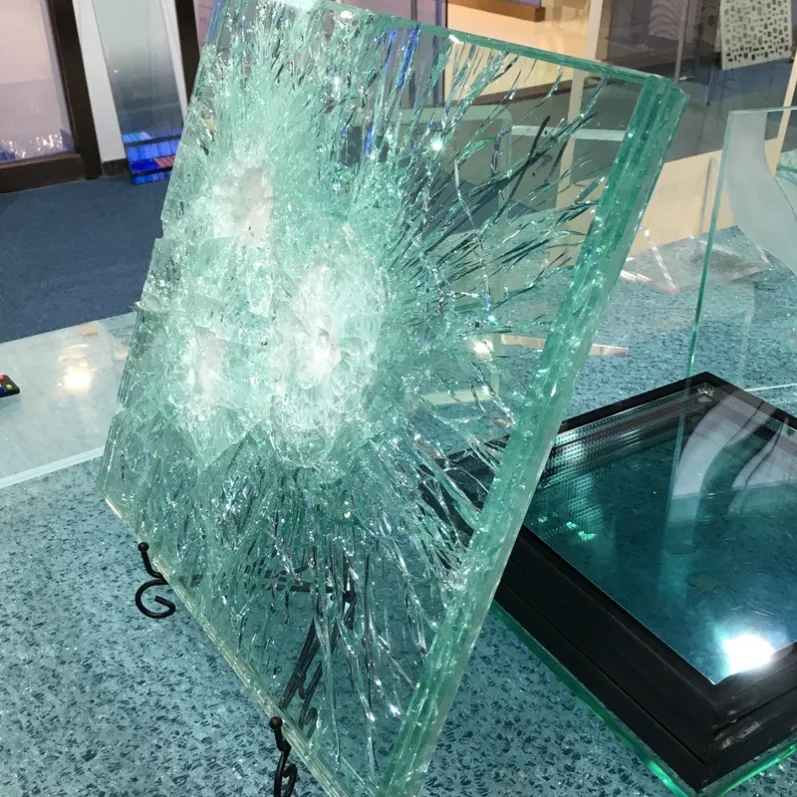
Multi-ply constructions can increase the difficulty of penetrating the glazing. When an impact breaks one or more glass plies, the remaining layers and interlayers may continue to resist penetration, depending on the assembly.
Specialized Interlayers
Interlayers bond the glass plies together and help retain broken fragments. In security systems, the interlayer material and thickness are selected as part of a designed construction to address a particular threat. Standard laminated glass and security-rated laminated glass should not be assumed to have equivalent resistance.
Glass and Polymer Combinations
Certain systems combine glass with polycarbonate or other polymer layers. These materials have different mechanical and surface characteristics, so the selected assembly must be assessed for its intended performance, durability, weight, and maintenance requirements.
The Complete Glazing System
The frame, anchors, fixings, joints, and installation details can be critical to performance. A security-rated glass pane does not automatically make an entire window or facade security-rated. The system must be compatible with the required tested or engineered configuration.
3. Types of Security Glass
The main types of security glazing are distinguished by the threat they are designed to resist. Identifying that threat is the first step toward selecting an appropriate product.
Burglary-Resistant Glass
Burglary-resistant glass is intended to resist or delay break-in attempts involving impacts from common tools. It is often considered for retail storefronts, display windows, and premises where reducing the likelihood of rapid entry is a priority.
The required resistance depends on the expected attack method and the applicable classification. A product should be selected based on relevant test evidence rather than appearance or thickness alone.
Forced-Entry Resistant Glass
Forced-entry resistant glazing is designed to withstand specified attempts to breach the glazing opening. Depending on the required level, the tested assembly may be evaluated against particular tools, impact methods, or attack durations.
Where a project specification covers a complete window or door system, the frame and installation details may also need to fall within the scope of the relevant test or engineering assessment.
Bullet-Resistant Glass
Bullet-resistant glass is designed to resist penetration from specified ballistic threats. It typically uses a specialized multi-layer construction that may incorporate glass, interlayers, and selected polymer materials.
Ballistic classifications depend on the relevant standard and test conditions, including the specified ammunition, projectile characteristics, and shot pattern. Some projects also require control of spall or fragments on the protected side. The required classification must be confirmed before a configuration is selected.
Blast-Resistant Glazing
Blast-resistant glazing is designed around specified blast loads and the expected response of the glass and supporting system. Depending on the design objective, the assessment may consider glass breakage, fragment hazards, glazing retention, and the performance of the frame and anchors.
Blast mitigation is a system-level design issue. The appropriate glass make-up cannot be selected from a generic thickness chart without the relevant load criteria, boundary conditions, and engineering or test evidence.
Which Type Is Right for Your Project?
Start by identifying the anticipated threat and the project's required performance level. Then confirm the applicable standard, glass dimensions, framing system, optical requirements, and available test evidence. These factors are more meaningful than selecting a product based only on the broad label “security glass.”
4. Common Security Glass Standards
Security glazing standards establish test methods or classification systems for particular types of attack. Because different standards evaluate different threats, the correct standard should be specified by the project team for the intended application.
EN 356 — Resistance to Manual Attack
EN 356 is used to classify security glazing against specified manual attacks. It is relevant to projects requiring defined levels of resistance to impact or penetration attempts. The required class and test evidence should be checked against the project specification.
ASTM F1233 — Security Glazing Materials and Systems
ASTM F1233 provides test methods for evaluating security glazing materials and systems under defined attack conditions. Confirm the applicable edition, the test scope, and whether the required evidence covers the glass alone or the complete assembly.
UL 752 — Bullet-Resisting Equipment
UL 752 addresses bullet-resisting equipment and includes performance classifications for specified ballistic threats. A required level should be identified using the applicable standard and project specification; different levels are not interchangeable.
Blast-Resistance Test and Design Criteria
Depending on the project, blast-related requirements may refer to methods or criteria such as ASTM F1642, ASTM F2248, or applicable GSA criteria. These references serve different purposes, so the design team should identify the specific requirement and acceptance criteria that govern the project.
Specification reminder: A test standard is not a blanket guarantee that a supplier's entire product range is certified. Request documentation for the exact product construction, classification, and assembly required.
5. Where Is Security Glass Used?
Security glazing is used in buildings where the risk assessment or project specification calls for more than ordinary safety glazing. Common applications include:
Luxury Retail
Flagship storefronts, display windows, and high-value merchandise areas where glazing security and visual transparency both matter.
Financial Facilities
Transaction counters, secure service windows, and other locations where a defined resistance level is required.
Government Buildings
Selected public facilities and security-sensitive buildings with specified forced-entry or ballistic requirements.
Security-Sensitive Perimeters
Projects where glazing is one element of a wider security strategy addressing specific impact or blast hazards.
Not every application requires the highest available protection level. A suitable specification should be based on the actual threat assessment, local requirements, intended use, and the performance needed from the entire building system.
6. How to Choose Security Glass for a Building Project
For architects, facade consultants, contractors, and procurement teams, a structured selection process can help prevent mismatches between the required protection level and the supplied product.
Step 1: Define the Threat
Identify whether the project requires resistance to burglary, forced entry, ballistic impact, blast pressure, or another specific hazard. Different threats require different design and testing approaches.
Step 2: Confirm the Required Standard
Identify the applicable standard, classification, and acceptance criteria. If the project specifies a particular test report or certified system, confirm the documentation needed before finalizing the product.
Step 3: Review Dimensions and Design Constraints
Share the panel dimensions, quantity, weight limitations, optical requirements, and any constraints relating to framing or installation. Larger or more complex assemblies may require additional feasibility checks.
Step 4: Check the Complete Assembly
Review the glass make-up alongside the frame, anchors, joints, and installation details. If the required performance applies to a complete window, door, or facade system, make sure the evidence covers the relevant assembly.
Step 5: Confirm Documentation and Delivery
Clarify the required product data, test reports, samples, mock-ups, packing requirements, and target delivery schedule. Confirm that the proposed product and documentation meet the project's approval process before placing an order.
7. Sourcing Security Glass for Custom Projects
Security-glazing projects often involve more coordination than standard glass orders. The required performance level may influence the number of plies, material selection, panel weight, optical properties, frame requirements, and production feasibility.
True Glass approaches these inquiries on a project basis, coordinating potential sourcing and processing options against the information provided. This may include reviewing drawings and glass schedules, identifying missing technical details, checking available product documentation, and coordinating production and export arrangements.
For an efficient review, share the project location, intended application, target protection level, applicable standard, panel dimensions, quantities, and any available framing or installation details. If the specification is not finalized, the current drawings and project requirements are a useful starting point.
Frequently Asked Questions
Is thicker glass always more secure?
No. Security performance depends on the complete glass construction, interlayers, materials, tested configuration, and the type of threat. Thickness alone does not establish a protection rating.
Is bullet-resistant glass the same as bulletproof glass?
“Bullet-resistant” is the more precise term because protection is evaluated against specified ballistic threats and test conditions. No product should be assumed to resist every projectile or ammunition type.
Can laminated glass provide security protection?
Laminated construction can help retain broken glass and can form the basis of security glazing. However, the actual level of forced-entry or ballistic resistance depends on the specific build-up and relevant test evidence.
Can security glass be used in insulated glass units?
Selected security glazing can be incorporated into insulated units where a compatible, verified configuration is available. The complete unit, framing system, and required security performance must be reviewed together.
Does a security glass rating cover the frame?
Not necessarily. The scope of a test or rating must be checked. Where the project requires system-level performance, the glass, frame, anchorage, and installation details need to be addressed by the applicable tested or engineered solution.
What information is needed for a security glass quotation?
Provide the project location, application, target threat, applicable standard or classification, panel dimensions, quantities, optical requirements, frame details, and delivery schedule. Existing drawings and specifications help identify the required configuration and documentation.
Plan Your Project
Need Security Glass for a Specific Protection Requirement?
Share your drawings, target protection level, and project specification. True Glass can help coordinate suitable sourcing options and review the details needed for your security-glazing inquiry.
Explore Security Glass Request a Quote